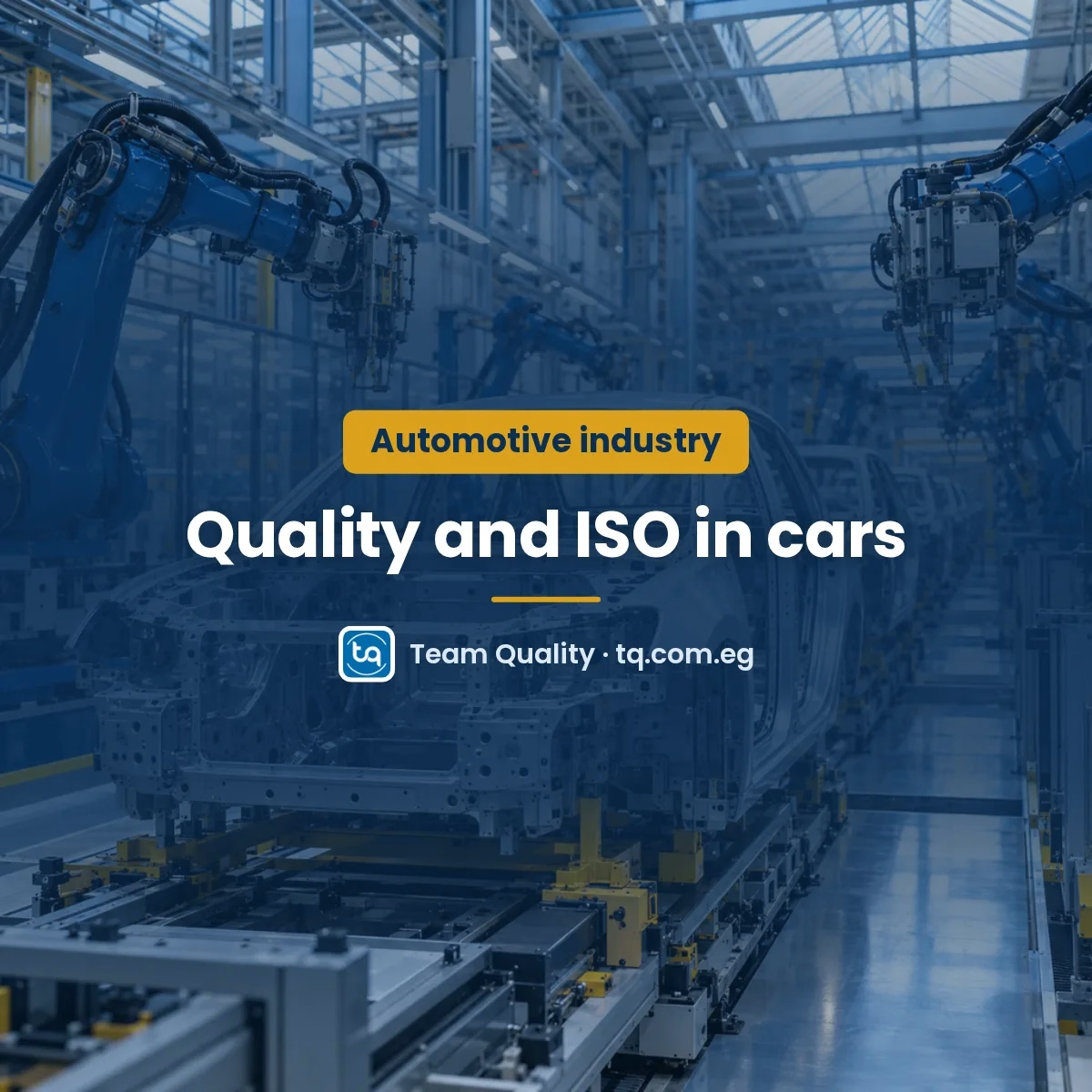
Quality first: countries have been paying growing attention to the automotive industry in recent years, offering many forms of support to manufacturers of vehicles and their components based on the quality and ISO standards those organisations meet.
In the automotive industry, ISO certification helps improve performance, increase efficiency and reduce errors and costs in industrial processes. The automotive quality management standard, IATF 16949 (formerly ISO/TS 16949), sets out specific requirements for vehicle manufacturers.
IATF 16949 was developed by the International Automotive Task Force (IATF), building on ISO 9001, for the global automotive industry. The system ensures continual improvement and prevents errors, and it operates under tight cost and time pressures.
Overall, ISO and quality certification is an effective tool for improving performance, increasing efficiency, enhancing customer satisfaction and competing in the market.
Which certifications does the automotive industry require?
The automotive industry requires many certifications to ensure quality and safety. One of the most important is the Gulf Conformity Certificate. The GCC Standardization Organization (GSO) issues these certificates to verify that manufacturers comply with the Gulf technical regulations.
These regulations include safety requirements for the vehicle body and all its systems, as well as maximum limits for gaseous pollutant emissions from vehicles. The Gulf technical regulations also cover tyres and motorcycles.
The manufacturer submits a declaration to the organisation confirming that it applies these regulations, and the organisation approves it after requesting all test results before production of the model intended for export begins. An approved Gulf Conformity Certificate is accepted in all member states of the organisation.
In addition, many other certifications are required depending on the country and region. These may cover safety, environmental and quality standards, such as ISO certification and national and regional safety certificates.
Does vehicle manufacturing require quality and ISO certification?
Yes. A factory must obtain all of these certificates before it starts producing vehicles. They are essential for ensuring quality, safety and compliance with international standards.
In Egypt, for example, factories must obtain a certificate from the Egyptian Organization for Standardization and Quality showing that a sample of their initial production conforms to the relevant standards. This certificate must be renewed whenever the industrial register is renewed.
In addition, any organisation, whether large or small, manufacturing or service-based, offering its own products or manufactured materials, can obtain ISO certification. These certificates include ISO 9001 for product or service quality management systems, ISO 14001 for environmental management, ISO 45001 (which replaced OHSAS 18001) for occupational health and safety, and ISO 22000 for food safety management systems.
In general, these certificates help companies achieve a high level of quality and efficiency and strengthen their ability to compete in the market.
Which quality and ISO certifications does the automotive industry need in Egypt?
In Egypt, vehicle manufacturers must obtain several certificates before starting production. These include:
- A certificate from the Egyptian Organization for Standardization and Quality: factories must obtain a certificate showing that a sample of their initial production conforms to the relevant standards. This certificate must be renewed whenever the industrial register is renewed.
- ISO certification: any organisation, whether large or small, manufacturing or service-based, offering its own products or manufactured materials, can obtain ISO certification. These certificates include ISO 9001 for product or service quality management systems, ISO 14001 for environmental management, ISO 45001 (which replaced OHSAS 18001) for occupational health and safety, and ISO 22000 for food safety management systems.
- Gulf Conformity Certificates: the GCC Standardization Organization (GSO) issues these certificates to verify that manufacturers comply with the Gulf technical regulations.
Team Quality: quality and ISO certification
Team Quality’s team of quality auditors, who award internationally accredited quality and ISO certificates, advises vehicle manufacturers, those planning to start manufacturing and quality managers at vehicle and component factories to comply with quality rules, controls and standards. The team provides audit and certification services, as well as open training courses such as internal-auditor and awareness courses. Contact usthrough our contact page
You can learn about Team Quality’s history and its work with prestigious organisations locally and internationally on our Facebook page