
In a world where consumers are increasingly aware of food quality and safety, GLOBALG.A.P. certification stands out as a global standard that ensures best agricultural practices are applied. It is designed to assess and document agricultural producers’ compliance with strict standards covering many areas, from food safety and environmental protection to animal welfare and worker wellbeing.
What is GLOBALG.A.P. certification?
GLOBALG.A.P. is a set of Good Agricultural Practice (GAP) standards designed to ensure that agricultural products are safe, sustainable and responsibly produced. The certificate is awarded by independent accredited bodies to farmers, livestock producers and food manufacturers who comply with the requirements of the standards.
Benefits of GLOBALG.A.P. certification
- Stronger consumer trust: GLOBALG.A.P. certification assures consumers that agricultural products bearing its mark have been produced to the highest quality and safety standards.
- Better market access: GLOBALG.A.P. certification gives farmers, livestock producers and food manufacturers access to new markets, especially international markets that value high-quality, responsibly produced goods.
- Greater sustainability: GLOBALG.A.P. certification promotes sustainable farming practices by reducing the use of pesticides and chemical fertilisers, using natural resources more efficiently and protecting biodiversity.
- Better working conditions: GLOBALG.A.P. standards require agricultural producers to provide safe and healthy working conditions for their workers and to respect their rights.
- Assured animal welfare: GLOBALG.A.P. standards emphasise humane treatment of animals and meeting their basic needs for food, water and shelter.
Requirements for GLOBALG.A.P. certification
- Farm assessment: farms undergo a comprehensive assessment by an accredited inspection body to confirm that they meet the requirements of the standards.
- Implementing a quality management system: agricultural producers must implement an effective quality management system, including monitoring and follow-up procedures, to ensure ongoing compliance with the standards.
- Training and awareness: agricultural producers must train their workers on the requirements of the standards and promote a culture of quality and safety.
- Ongoing audits: farms are audited periodically by an accredited inspection body to ensure continued compliance with the standards.
The origins of GLOBALG.A.P.
The EurepGAP standard, the forerunner of GLOBALG.A.P., was created in the late 1990s by a number of major European supermarket chains and their key suppliers. Its aim was to assure the quality of agricultural products and meet consumers’ growing expectations around food safety and sustainable production.
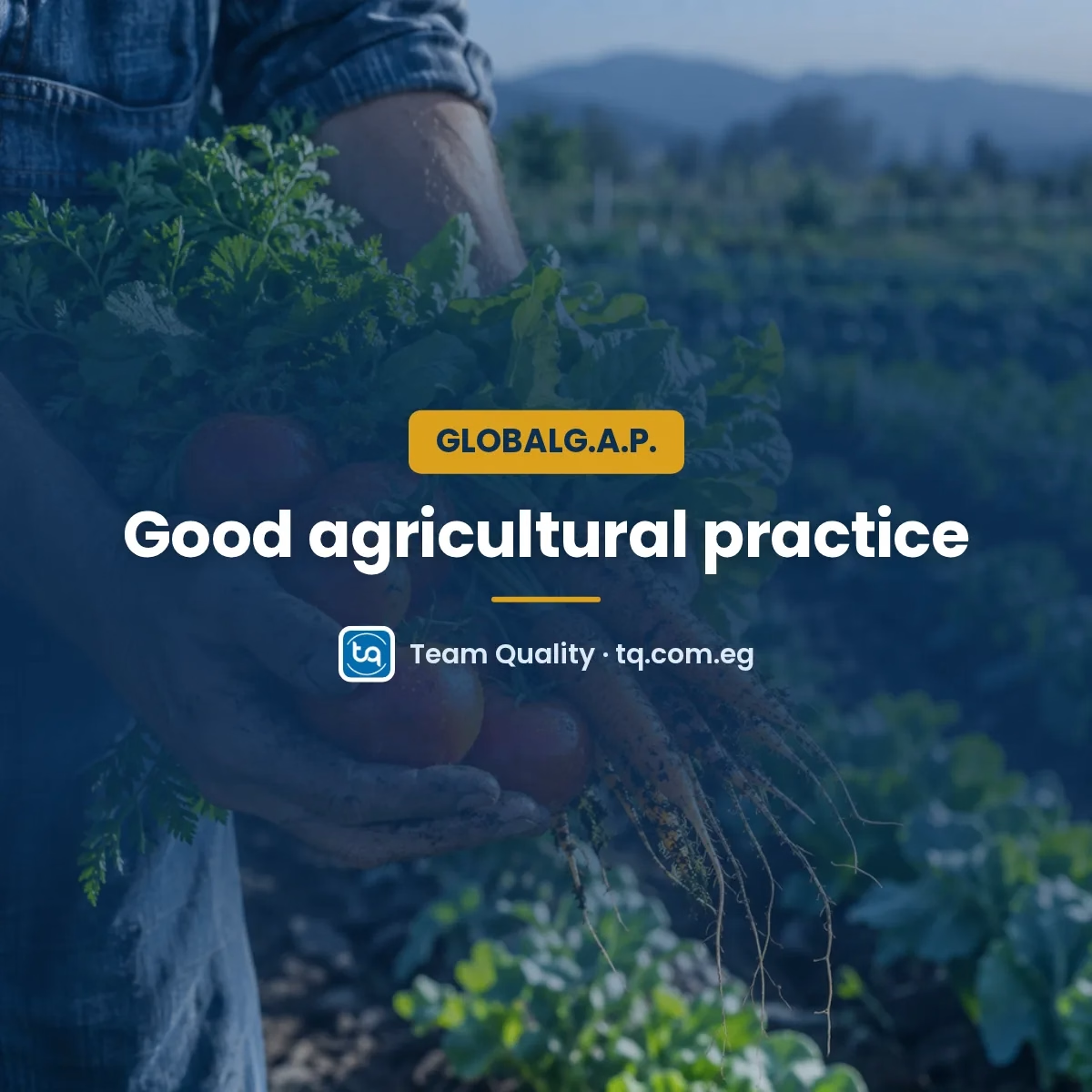
The development of GLOBALG.A.P.
Over time, EurepGAP expanded to include producers and consumers around the world. In 2007 it was renamed GLOBALG.A.P. to reflect its global reach.
Who can obtain GLOBALG.A.P. certification?
Any organisation involved in the agricultural production chain can apply for GLOBALG.A.P. certification, including:
- Farmers: farmers who grow crops or raise livestock can obtain GLOBALG.A.P. certification for their farms.
- Livestock producers: livestock producers who produce meat or other animal products can obtain GLOBALG.A.P. certification for their farms.
- Food manufacturers: food manufacturers handling fresh or processed agricultural products can obtain GLOBALG.A.P. certification for their facilities.
- Suppliers: suppliers providing inputs or services to farmers or food manufacturers can obtain GLOBALG.A.P. certification for their operations.
How do you obtain GLOBALG.A.P. certification?
To obtain GLOBALG.A.P. certification, a farm must undergo an independent assessment by an accredited certification body. The assessment reviews the farm’s practices to confirm that they comply with GLOBALG.A.P. standards.
GLOBALG.A.P. in Egypt
Egypt is one of the leading countries in applying GLOBALG.A.P. standards. Many Egyptian farms hold GLOBALG.A.P. certification, demonstrating Egypt’s commitment to producing high-quality agricultural products that meet global food safety and sustainability standards.
Team Quality specialises in auditing and awarding international ISO certifications to organisations, factories, companies and government bodies of all kinds. It is accredited locally by the Egyptian Accreditation Council (EGAC) and internationally by the International Accreditation Service (IAS), both signatories of the International Accreditation Forum (IAF) multilateral recognition arrangement. It is also registered with the Egyptian Organization for Standardization and Quality (EOS).
Team Quality’s goal is to help companies of every size and sector achieve excellence in quality by offering a wide range of services, including:
- Quality management systems: we audit and certify internationally recognised management systems such as ISO 9001, ISO 14001 and ISO 45001.
- Training: we offer open training courses, available to all, across the different areas of quality, such as internal auditing, risk analysis and problem solving.
- Assessment: we provide independent assessment services to measure how well companies comply with recognised quality standards.
Our accreditations
Team Quality is accredited locally by the Egyptian Accreditation Council (EGAC) and internationally by the International Accreditation Service (IAS).
Locally by:
- The Egyptian Accreditation Council (EGAC)
International accreditation and registration:
- Internationally: International Accreditation Service (IAS), an IAF MLA signatory
- Registered with: Egyptian Organization for Standardization and Quality (EOS)
- Our certificates can be verified on IAF CertSearch
For more details, contact us directly on 01014442207 or via WhatsApp
#TeamQuality #TeamQualityVision #Quality #ISO


