
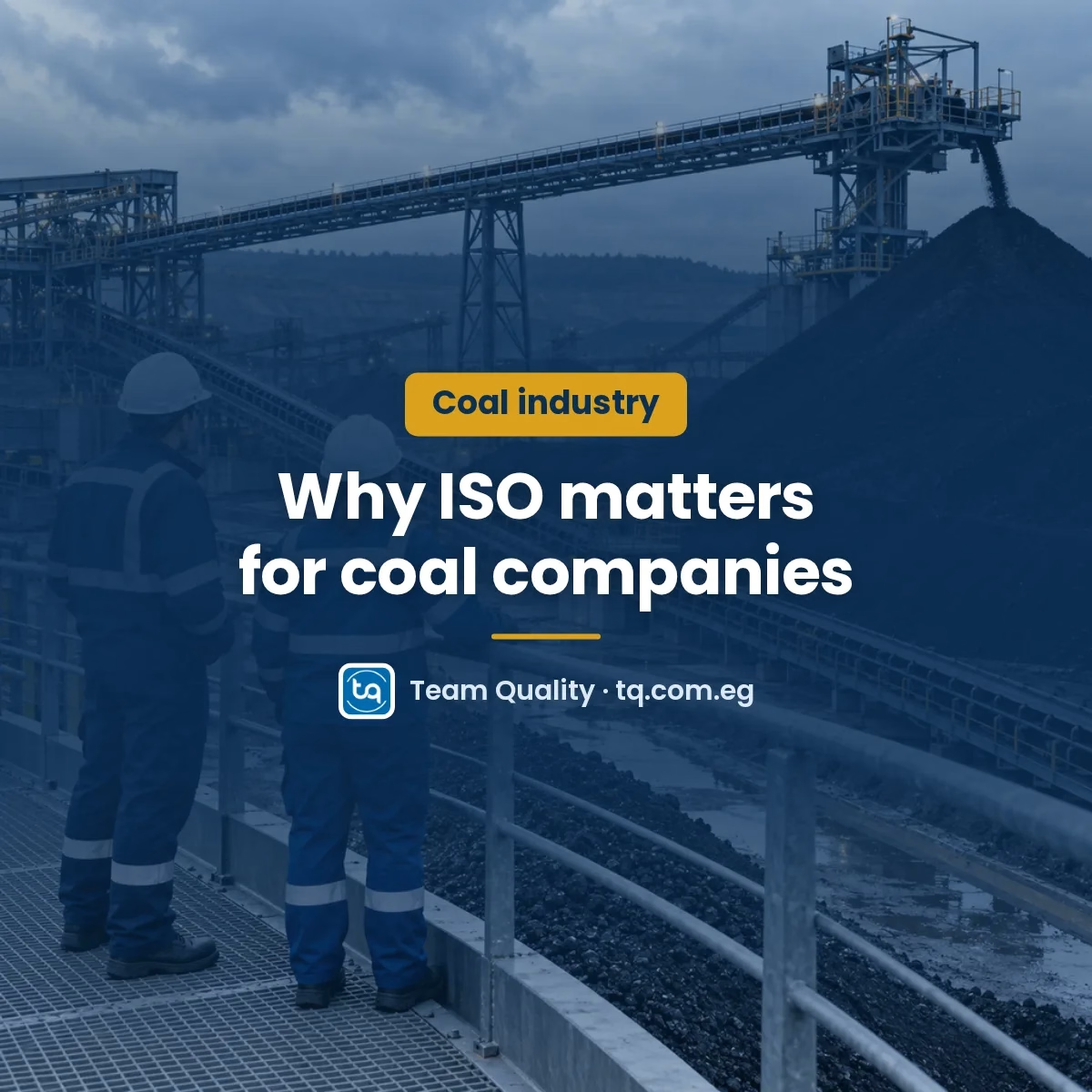
Many industries affect the environment and public health, and coal is one of the most significant, given the environmental and health damage it can cause if it is not managed properly. This is why applying ISO standards in the coal industry matters. ISO standards help improve production processes, assure product quality, reduce negative environmental impacts and protect the health of workers.
How ISO Relates to the Coal Industry
The coal industry is a vital sector that plays a major role in the global economy, both as a source of fuel for energy and through its role in other industries such as steel and cement. However, it is also an industry that can harm the environment and human health if it is not managed to the highest standards. Applying ISO standards is therefore one of the key ways to improve performance, increase efficiency and reduce the environmental and health damage the industry causes. In this article, we look at the relationship between ISO standards and the coal industry, and how these standards help improve quality, protect the environment and safeguard the health and safety of workers.
1. What ISO Is and Why It Matters in the Coal Industry
ISO stands for the International Organization for Standardization, an independent body that develops international standards covering many industrial and commercial fields, including quality, environment, and health and safety. The main aim of these standards is to improve processes, assure quality and protect the environment and public health.
In the coal industry, which faces many environmental and health challenges, ISO standards are an important tool for ensuring that companies comply with international requirements, raising performance and reducing risk. Applying ISO standards in the coal industry is vital to improving product quality, reducing environmental impact and providing a safe working environment for employees.
2. ISO and Product Quality in the Coal Industry
One of the most important ISO certifications is ISO 9001, which focuses on improving a company’s quality management system. In the coal industry, ISO 9001 helps companies improve every aspect of production and processing. For example:
- Improving production processes: applying quality standards streamlines workflows and cuts waste of raw materials and energy, which lowers costs and increases efficiency.
- Assuring final product quality: quality standards help companies make sure the coal they produce meets the required specifications for size, purity and chemical properties, building customer satisfaction and trust.
- Achieving service excellence: companies that follow ISO standards enjoy a strong market reputation, as customers regard ISO 9001 certified companies as the most reliable suppliers of high-quality products.
3. ISO and Environmental Protection in the Coal Industry
Coal is an industry that causes considerable environmental damage, including air pollution, water contamination and deforestation. Applying ISO 14001, which focuses on environmental management, is therefore essential. This certification helps companies reduce their environmental impact by:
- Reducing pollution: environmental management standards drive down emissions of pollutants such as carbon dioxide and sulphur produced when coal is burnt.
- Managing waste: ISO 14001 certified companies must put in place effective strategies to manage the waste generated by coal extraction.
- Sustainability: the certification promotes sustainable mining practices, such as rehabilitating sites damaged by mining, which limits the negative impact on the local environment.
By complying with these standards, companies reduce their environmental footprint and strengthen sustainable working practices in line with international standards.
4. Worker Health and Safety in the Coal Industry
Among the biggest challenges facing the coal industry are the health risks associated with extraction, such as exposure to toxic dust, mining accidents and hazards from heavy machinery. ISO 45001, which focuses on occupational health and safety management, plays a key role in improving worker safety in this industry. Its requirements help companies to:
- Provide a safe working environment: policies and procedures are designed to reduce health and occupational risks for workers, such as limiting exposure to harmful dust and using suitable safety equipment.
- Prevent accidents: the standard supports training programmes that teach workers how to handle heavy machinery and identify potential hazards in the workplace, reducing the number of accidents and injuries.
- Monitor workers’ health: the requirements also include regular medical check-ups to ensure workers’ health is not affected by toxic substances such as coal dust.
By applying these standards, coal companies can improve working conditions and protect their employees from the health risks associated with the industry.
5. The Benefits of Certification for Coal Companies
Obtaining ISO certification is not just an administrative exercise; it is a long-term investment that brings companies many strategic benefits:
- Greater operational efficiency: through fewer errors, better management and standardised procedures.
- Access to new markets: ISO-certified companies are more attractive to customers and investors in new markets, as many countries and businesses prefer to work with companies that follow international standards.
- A stronger reputation: companies that follow ISO standards build a strong market reputation thanks to their commitment to quality, safety and environmental protection, which increases their competitiveness.
- Regulatory compliance: ISO certifications help companies comply with environmental and health regulations, reducing legal risks and fines.
ISO standards and the coal industry complement each other, with the shared aim of improving performance and efficiency in this vital sector. By implementing certifications such as ISO 9001, ISO 14001 and ISO 45001, coal companies can improve product quality, protect the environment and keep their workers safe. These certifications do more than improve internal processes; they also enhance a company’s reputation and widen its opportunities in local and international markets. Ultimately, commitment to ISO standards is an essential step towards sustainability and innovation in the coal industry.
Our Accreditations
The company is accredited locally by the Egyptian Accreditation Council (EGAC) and internationally by the International Accreditation Service (IAS).
Locally by
- Egyptian Accreditation Council EGAC
International accreditation and registration:
- Internationally: International Accreditation Service (IAS), an IAF MLA signatory
- Registered with: Egyptian Organization for Standardization and Quality (EOS)
- Our certificates can be verified on IAF CertSearch
For more details, contact us directly on 01014442207 or via WhatsApp
#TeamQuality #TeamQualityVision #Quality #ISO


