
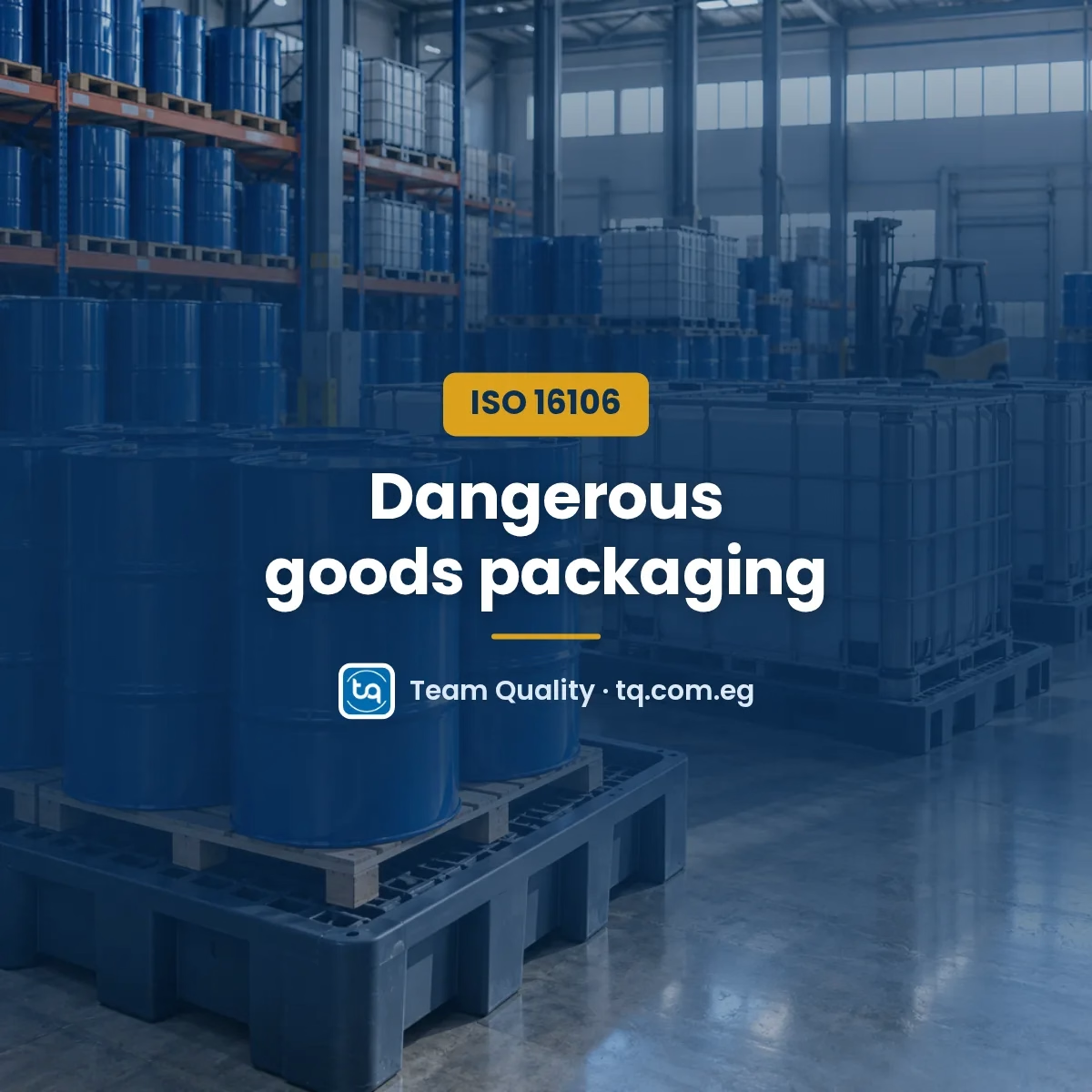
The ISO 16106 standard is a valuable tool for companies that manufacture and distribute dangerous goods, as it provides a clear framework for ensuring the quality of the packaging used for these materials and protecting it against damage and leakage.
What Is ISO 16106?
ISO 16106 is comprehensive guidance designed to help organisations apply a quality management system to packaging for dangerous goods. It covers many aspects of production and distribution, from packaging design through to delivery to the end user.
Why this standard matters
- Environmental safety: It helps prevent dangerous substances from leaking into the environment, protecting public health and environmental safety.
- Consumer protection: It ensures that packaging is manufactured to standard specifications, reducing the risk of accidents during transport and storage.
- A stronger company reputation: It demonstrates the company’s commitment to international quality standards, building the confidence of customers and investors.
Key Elements of ISO 16106
The standard includes a set of core elements that organisations must apply, including:
- Determining requirements: identifying customer requirements and the laws and regulations relevant to packaging materials.
- Design and development: ensuring that the packaging design meets the specified requirements and keeps the product safe.
- Purchasing: selecting reliable suppliers to guarantee the quality of the raw materials used to manufacture the packaging.
- Production: monitoring the production process and making sure it conforms to the specified requirements.
- Measurement and monitoring: carrying out regular inspections to ensure packaging quality.
- Continual improvement: applying a system for analysing performance and taking the necessary corrective action.
Benefits of Implementing ISO 16106
The main benefits of implementing this standard are:
- Reduced risk: lowering the risks associated with transporting and storing dangerous goods.
- More efficient operations: streamlining processes and improving productivity.
- Higher customer satisfaction: meeting customer expectations and delivering high-quality products.
- Regulatory compliance: complying with national and international laws and regulations.
How to implement the standard
To implement ISO 16106 successfully, companies should follow these steps:
- Appoint a team: form a team responsible for implementing and monitoring the standard.
- Training: train employees on the requirements of the standard and the new working procedures.
- Develop documentation: prepare the necessary documents, such as the quality manual and standard operating procedures.
- Implementation: apply the standard’s procedures at every stage of production and distribution.
- Internal audit: carry out regular internal audits to make sure the standard is being applied correctly.
- Continual improvement: make ongoing improvements to the system based on the results of internal audits.
Who Can Obtain ISO 16106 Certification?
ISO 16106 certification is an internationally recognised certificate awarded to companies that demonstrate their ability to manage and apply an effective quality management system for dangerous goods packaging. Any company involved in manufacturing, storing or transporting dangerous goods can apply for it.
More specifically, the following companies can benefit from this certification:
- Chemical manufacturers: companies that produce hazardous chemicals and fill them into various types of packaging.
- Pharmaceutical companies: companies that produce and package hazardous medicines.
- Petrochemical companies: companies that handle petroleum products and liquefied gases.
- Transport companies: carriers that transport dangerous goods by road, sea or air.
- Storage companies: companies that store dangerous goods in warehouses.
- Packaging companies: companies that manufacture specialist packaging for dangerous goods.
Team Quality specialises in auditing and awarding international ISO certificates to institutions, factories, companies and government bodies. It is accredited locally by the Egyptian Accreditation Council (EGAC) and internationally by the International Accreditation Service (IAS), both signatories of the International Accreditation Forum (IAF) multilateral recognition arrangement. It is also registered with the Egyptian Organization for Standardization and Quality (EOS).
At Team Quality, our goal is to help companies of all sizes and sectors achieve excellence in quality through a wide range of services, including:
- Certification: we audit and certify organisations against internationally recognised standards such as ISO 9001, ISO 14001, ISO 45001 and 29994 and others.
- Training: We offer open training courses, available to all, across different areas of quality, such as internal auditing, risk analysis and problem solving.
- Assessment: We provide independent assessment services to measure how well companies comply with recognised quality standards.
Our Accreditations
Team Quality holds the following accreditations and registrations:
Locally by
- The Egyptian Accreditation Council (EGAC)
International accreditation and registration
- Internationally: International Accreditation Service (IAS), an IAF MLA signatory
- Registered with: Egyptian Organization for Standardization and Quality (EOS)
- Our certificates can be verified on IAF CertSearch
For more details, contact us directly on 01014442207 or via WhatsApp
#TeamQuality #TeamQualityVision #Quality #ISO


