
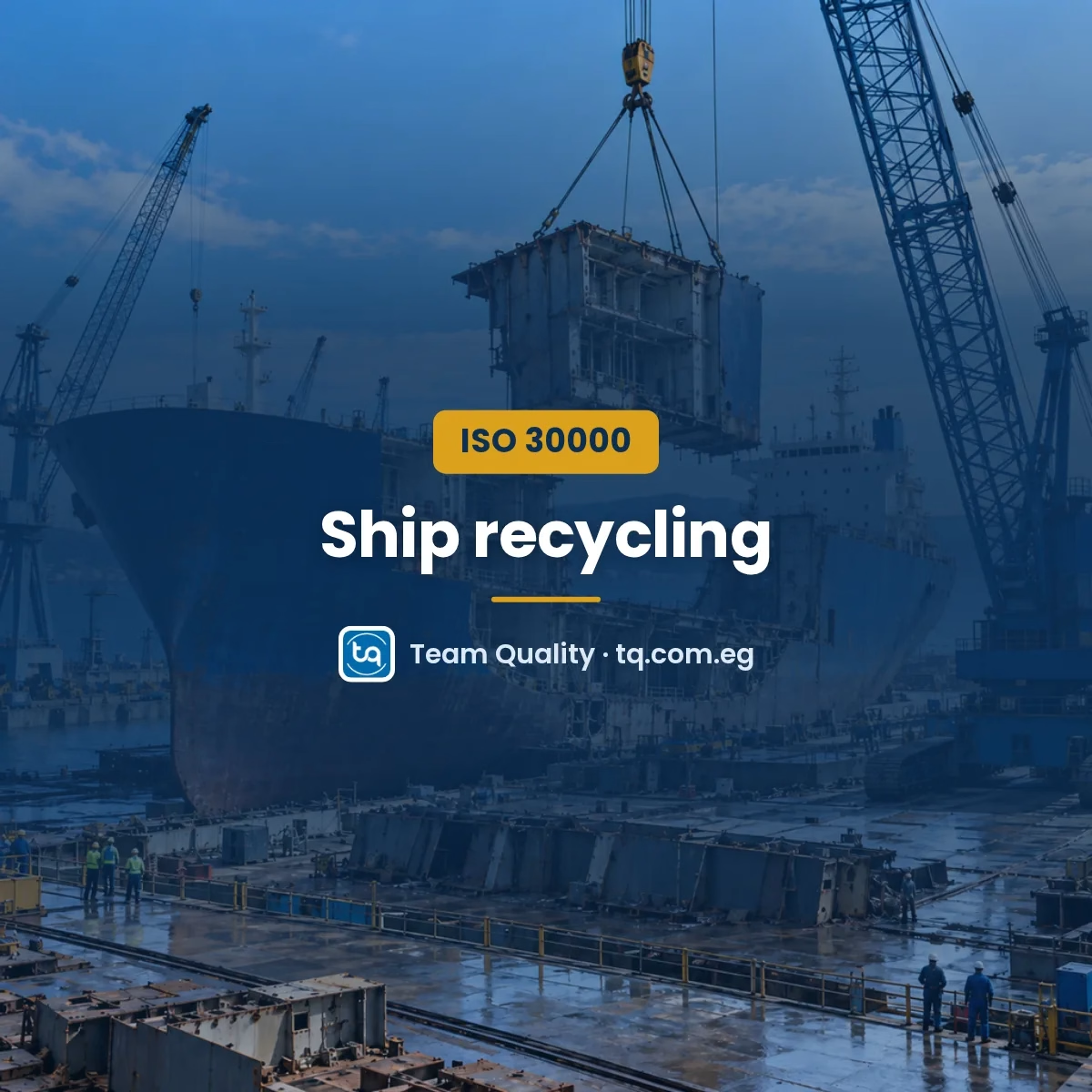
Shipping is one of the pillars of the global economy, yet it also leaves a significant environmental footprint, particularly when vessels reach the end of their working lives. If ship recycling is not carried out properly, it can cause serious pollution of water, soil and air, as well as health risks for the people who work in the industry.
This created an urgent need for international standards to ensure that ships are recycled safely and in an environmentally sustainable way. One of the most important of these is ISO 30000, the standard for ship recycling management systems.
ISO 30000
What Is ISO 30000?
ISO 30000 is an international standard published by the International Organization for Standardization (ISO) that sets out the requirements for an effective ship recycling management system.
The system provides a comprehensive framework for every activity involved in ship recycling, from planning and preparation through to the safe disposal of waste.
The Objectives of ISO 30000
- Worker safety: ensuring a safe working environment for staff at recycling facilities.
- Sustainability: encouraging the reuse of recyclable materials and the recovery of valuable metals.
- Transparency: increasing transparency in ship recycling operations.
- Economic considerations: ship recycling can be a major economic opportunity, but it needs sound management to make the most of the available resources.
Components of an ISO 30000 Management System
An ISO 30000 management system is made up of a set of integrated elements, including:
- Environmental policy: a formal statement of the facility’s commitment to protecting the environment and improving its environmental performance.
- Planning and objectives: setting environmental objectives and the plans needed to achieve them.
- Resources: providing the resources needed to implement the system, including people and finance.
- Operations: defining and documenting the processes involved in ship recycling.
- Evaluation: carrying out regular assessments of the system’s effectiveness.
- Continual improvement: identifying opportunities for improvement and taking the necessary action.
The Benefits of ISO 30000 Certification
- Better public image: strengthening the facility’s reputation as an environmentally responsible business.
- Greater trust: earning the confidence of customers and business partners.
- Access to new markets: meeting the requirements of markets that insist on ISO 30000 certification.
- Reduced risk: lowering legal and environmental risks.
- International legal compliance: the standard supports compliance with international environmental legislation such as the Hong Kong Convention for the Safe and Environmentally Sound Recycling of Ships.
- Attracting investment: it appeals to investors interested in sustainable projects.
- Integration with other management systems: ISO 30000 can be combined with other quality and occupational health and safety management systems.
- Improved operational efficiency: it helps streamline processes and reduce waste.
Who Can Obtain ISO 30000 Certification?
ISO 30000 certification for ship recycling management systems is an international certificate awarded to companies and facilities that work in ship recycling and comply with specific requirements to protect workers and the environment.
In general, any facility involved in ship recycling, whatever its size or location, can seek this certification. Whether it is state-owned or privately owned, it is eligible as long as it meets all the requirements set out in the standard.
Types of Organisation That Can Be Certified
- Ship recycling companies: the main facilities that dismantle ships and recycle their components.
- Shipping companies: companies that own a fleet and recycle their older vessels can seek certification.
- Suppliers: companies that provide services or products linked to ship recycling, such as hazardous waste disposal firms or metal recyclers.
- Government organisations: government bodies responsible for regulating shipping and ship recycling can obtain the certificate as evidence of their commitment to international standards.
Team Quality is a company specialising in auditing and awarding international ISO certificates to all kinds of organisations, factories, companies and government bodies. It is accredited locally by the Egyptian Accreditation Council (EGAC) and internationally by the International Accreditation Service (IAS), both signatories of the International Accreditation Forum (IAF) multilateral recognition arrangement. It is also registered with the Egyptian Organization for Standardization and Quality (EOS).
Our goal at Team Quality is to help companies of every size and sector achieve excellence in quality by offering a wide range of services, including:
- Certification: we audit and certify organisations against internationally recognised standards such as ISO 9001, ISO 14001, ISO 29994 and others.
- Training: we offer open training courses, available to all, across different areas of quality, such as internal auditing, risk analysis and problem solving.
- Assessment: we provide independent assessment services to measure how well companies comply with recognised quality standards.
Our Accreditations
Team Quality holds the following accreditations and registrations:
Locally by
- The Egyptian Accreditation Council (EGAC)
International accreditation and registration
- Internationally: International Accreditation Service (IAS), an IAF MLA signatory
- Registered with: Egyptian Organization for Standardization and Quality (EOS)
- Our certificates can be verified on IAF CertSearch
For more details, contact us directly on 01014442207 or via WhatsApp
#TeamQuality #TeamQualityVision #Quality #ISO


