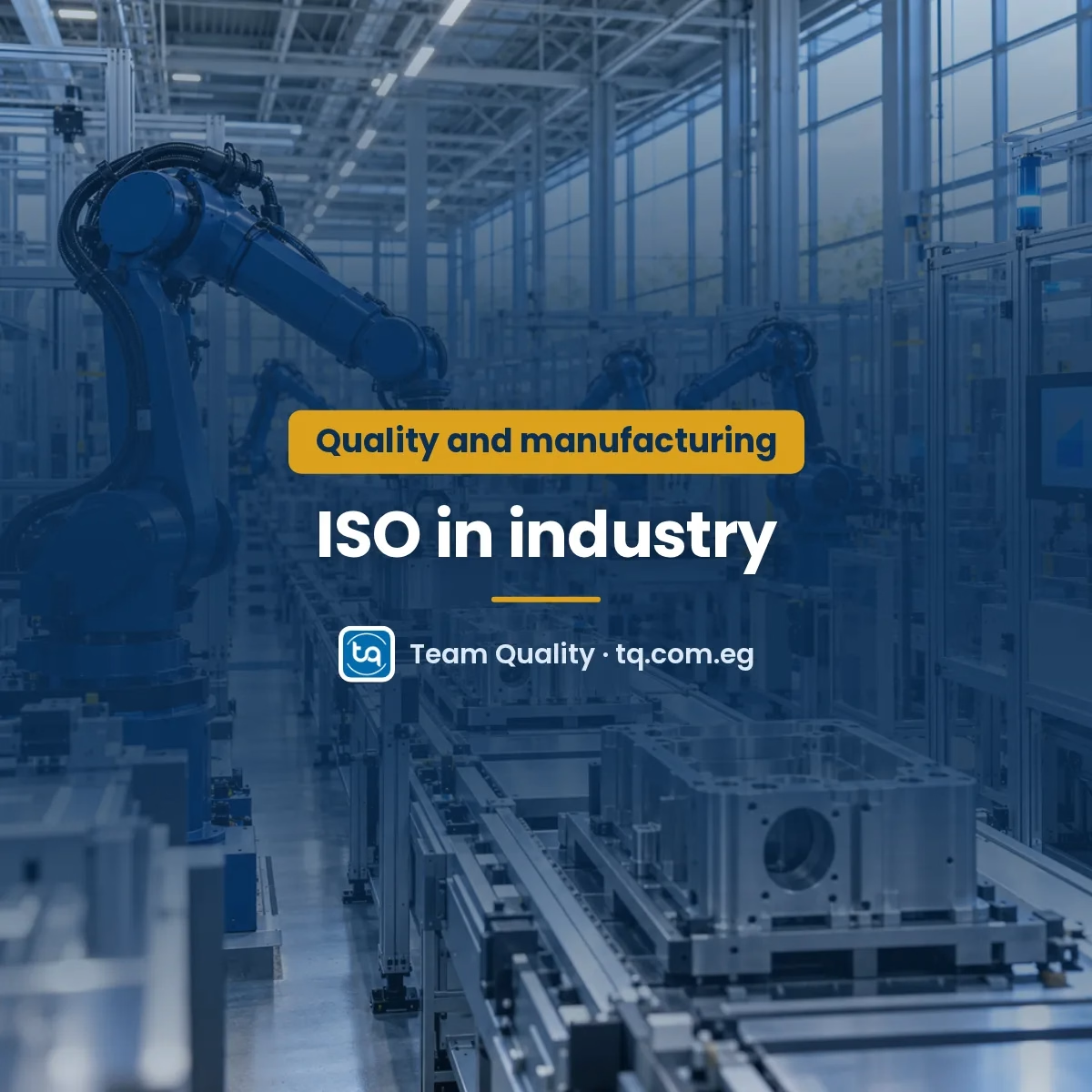
Quality is the decisive factor in manufacturing and one of the most important factors in whether a product’s market share grows or shrinks. Advances in quality help achieve customer satisfaction, reduce product failure rates and improve production efficiency.
ISO certificates play an important role in documenting the credibility of a manufacturer’s quality, covering what it produces and all the processes involved throughout manufacturing, from the management structure through to marketing and distribution.
ISO certificates provide the guidance and standards needed to improve and document the quality of industrial facilities. They also verify and assess the facility and its brand in different markets, giving it credibility with the customers and suppliers it aims to work with throughout its production cycles. Here is a detailed look.
The Importance of ISO Certification in Manufacturing
1. Quality assurance
ISO certificates act as a guarantee of the quality of a facility and its finished products among market players. At the outset they secure stable business relationships, and over time they keep those relationships stable, free of the concerns that come with inconsistent or irregular quality.
2. Strengthening customer satisfaction by delivering the best quality
When a facility documents its quality and has it audited by internationally accredited bodies that assess quality systems and standards, it secures its place among the quality competitors in the market. Over time, this builds customer satisfaction and growing trust in the brand and all the good practices carried out under its name.
3. Improving production efficiency by applying quality standards
To obtain an accredited ISO certificate, a manufacturer must meet specific, genuine quality standards to move from one quality level to the next. In doing so, the facility will naturally develop every stage of manufacturing and process management, which has a positive effect on the quality of the final product and establishes the product’s good reputation in the market.
4. Compliance with laws and regulations on quality
Countries set laws and regulations for manufacturers so that they can classify the quality of each factory and provide what each industry needs according to its size. ISO certificates help determine each facility’s standing locally and internationally, giving brands the right to export and access to exporters’ privileges, and earning them considerable trust among private and public organisations. Governments recognise ISO-certified companies and organisations as an “elite” group. You are just one call away from joining them: contact Team Quality for ISO certification.
These and other advantages lead the business community to recognise the scale of your activity and enhance its reputation and strength. Here are the key certificates required in industry to ensure success.
The Most Important ISO Certificates for Manufacturers
ISO 9001 certification: this certificate covers quality standards across all processes and activities, raising the organisation’s ability to deliver high-quality products and services.
ISO 14001 certification: this certificate covers the application of environmental compliance standards within the organisation.
Obtaining ISO 22000: this certificate covers the application of food safety standards, (HACCP) hazard analysis and critical control points.
ISO 45001: this certificate covers the application of occupational health and safety requirements to control the risks present in the organisation.
ISO 13485: this certificate covers the application of quality requirements in the manufacture of medical devices and supplies.
ISO 27001 certification: this certificate covers the requirements for information security and confidentiality, protecting information from loss, damage or breaches.
You can also follow Team Quality’s latest news and its work with some of the strongest brands locally and internationally on our Facebook page